
to get a personalized navigation.
to get a personalized navigation.

- Mark Topic as New
- Mark Topic as Read
- Float this Topic for Current User
- Bookmark
- Subscribe
- Mute
- Printer Friendly Page

When retrieving a customer using the GET /customer/{customerCd} endpoint, attributes of type date are formatted as yyyy-MM-dd hh:mm:ss.fff.
Ex:
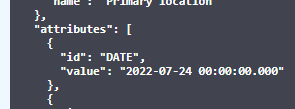
If then we pass in that value as is to the PUT /customer/{customerCd} endpoint, it returns an error 400:

It would be much more convenient if the GET endpoint returned date attributes in a format that is accepted by the PUT endpoint.

.gif "VISMA")
.gif "VISMA")
Hello,
after reviewing the case, the Attribute's [Date] accepted data format is yyyy-MM-dd withot hour section, and the GET Customer > Attributes returns the "00:00:00.000" as wrapped by the base date-time format in the DTOs.
Since the data-class is shared among other DTOs, removing the time part would a cause a breaking change and there are other variables where the time part is in use.
Consequently, we've conveyed that to the development team if GET-Customer > Attribute[Date] field can be individually edited to exclude the time part. We will provide further updates as more information is available.

Useful pages
Contact us
Copyright © 2022 Visma.com. All rights reserved.
 Visma Finland
 Visma Latvia
 Visma Netherlands
 Visma Norway
 Visma Sweden
 Visma Developers & Partners
 Visma Latin America